How to Prepare a Dishwasher for Pickup Without a Water Mess
Drain, disconnect, release, and stage a dishwasher before the hauler arrives.
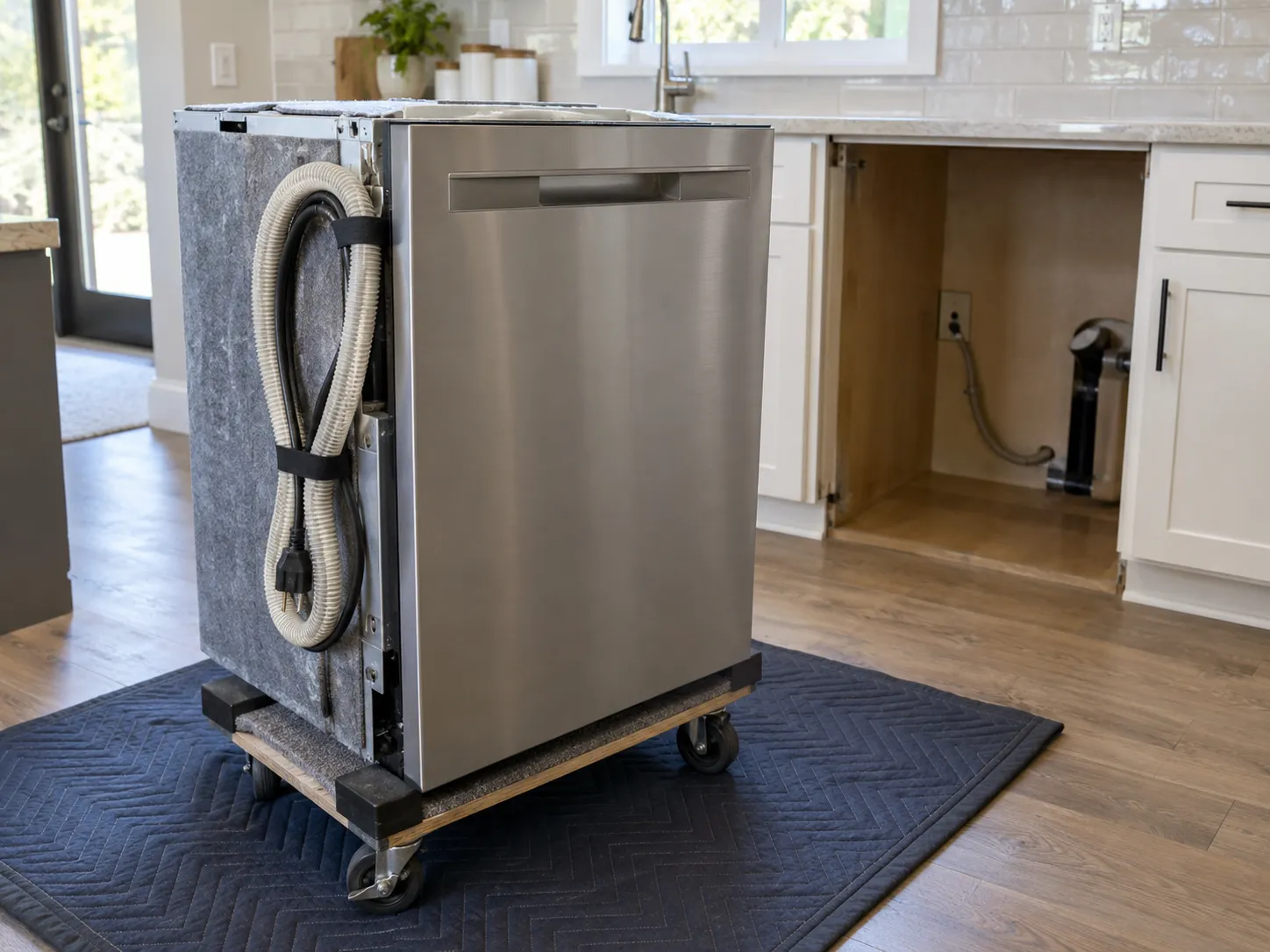
A built-in dishwasher needs to be empty, drained, disconnected from power and plumbing, and released from the cabinet before pickup. Residual water can remain in the hose and sump, so keep a shallow tray and absorbent towels nearby.
Empty and drain the machine
Remove dishes, racks that slide freely, and detergent. If the machine runs, use its drain function. Standing water that will not drain may need service before the unit can move safely.
Disconnect the utilities
Turn off the appropriate circuit and water supply. A plumber or electrician should handle any connection you are not trained or authorized to release. Cap or secure the supply and drain lines so they do not leak into the cabinet.
Release the unit from the cabinet
Built-in dishwashers are commonly attached under the counter or to adjacent cabinets. Remove the mounting screws, lower the leveling feet if needed, and confirm the unit slides without catching flooring or trim. The pickup crew needs the appliance free from the structure.
Before the arrival window
- Racks and dishes removed
- Standing water drained
- Power and water disconnected
- Mounting screws removed
- Hoses contained
- Cabinet edge and floor protected
- Path to the loading area clear
Report the awkward parts
Mention a raised floor edge, an island that narrows the turn, stairs, or an apartment loading rule. Those details affect the carrying plan more than the dishwasher’s brand.
Read the dishwasher removal scope or prepare the details for a quote.
Sources and scope
Local disposal distinctions were checked against current Snohomish County, King County, or city guidance listed in the project research notes. Facility acceptance, fees, and programs can change; verify the responsible source before drop-off.