What Must Happen Before a Stove or Oven Pickup?
A clear line between disconnection, cabinet work, and hauling.
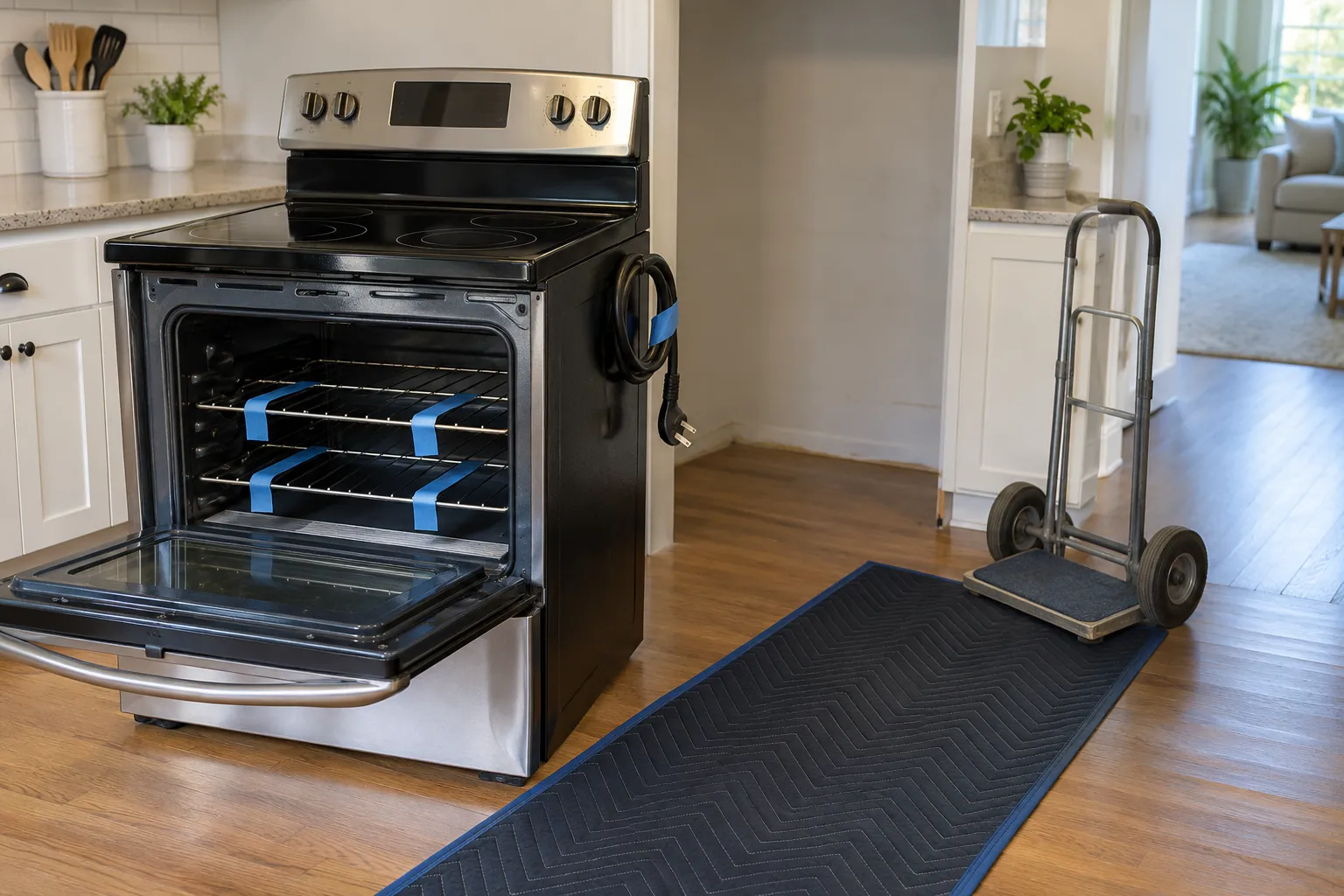
A freestanding electric range can usually be picked up after it is empty, cool, unplugged, and clear of surrounding cabinetry. Gas, hardwired, wall-oven, and cooktop connections need qualified disconnection before the hauling appointment.
Identify the appliance first
A freestanding range slides out as one piece. A wall oven attaches to cabinetry. A cooktop sits in a counter cutout. These are different jobs. A removal crew can haul an appliance that is ready to move, but the crew should not be expected to alter cabinets, counters, gas lines, or fixed electrical wiring unless that work is separately confirmed.
Prepare a freestanding electric range
- Let every surface cool.
- Remove pans and loose accessories.
- Secure oven racks so they cannot slide.
- Unplug the cord after the circuit is safely off.
- Clean grease from handles and exterior grip points.
- Clear the floor path to the exit.
Stop if you find a gas or hardwired connection
Do not improvise with fuel or fixed wiring. Arrange the appropriate licensed trade professional, then confirm the appliance is fully disconnected and safe to move. Tell the pickup company what type of range it is when you request the quote.
Plan around the kitchen
Measure between the appliance, island, and door trim. Protect a finished floor and note thresholds. If a remodel crew will be on site, choose who is responsible for disconnecting, releasing, and staging the unit so the pickup window does not become a handoff dispute.
See what is included on the stove and oven removal page. For a mixed kitchen load, use the appliance removal overview.
Sources and scope
Local disposal distinctions were checked against current Snohomish County, King County, or city guidance listed in the project research notes. Facility acceptance, fees, and programs can change; verify the responsible source before drop-off.