Washer and Dryer Pickup Checklist
What to disconnect, drain, measure, and report before a laundry pair leaves.
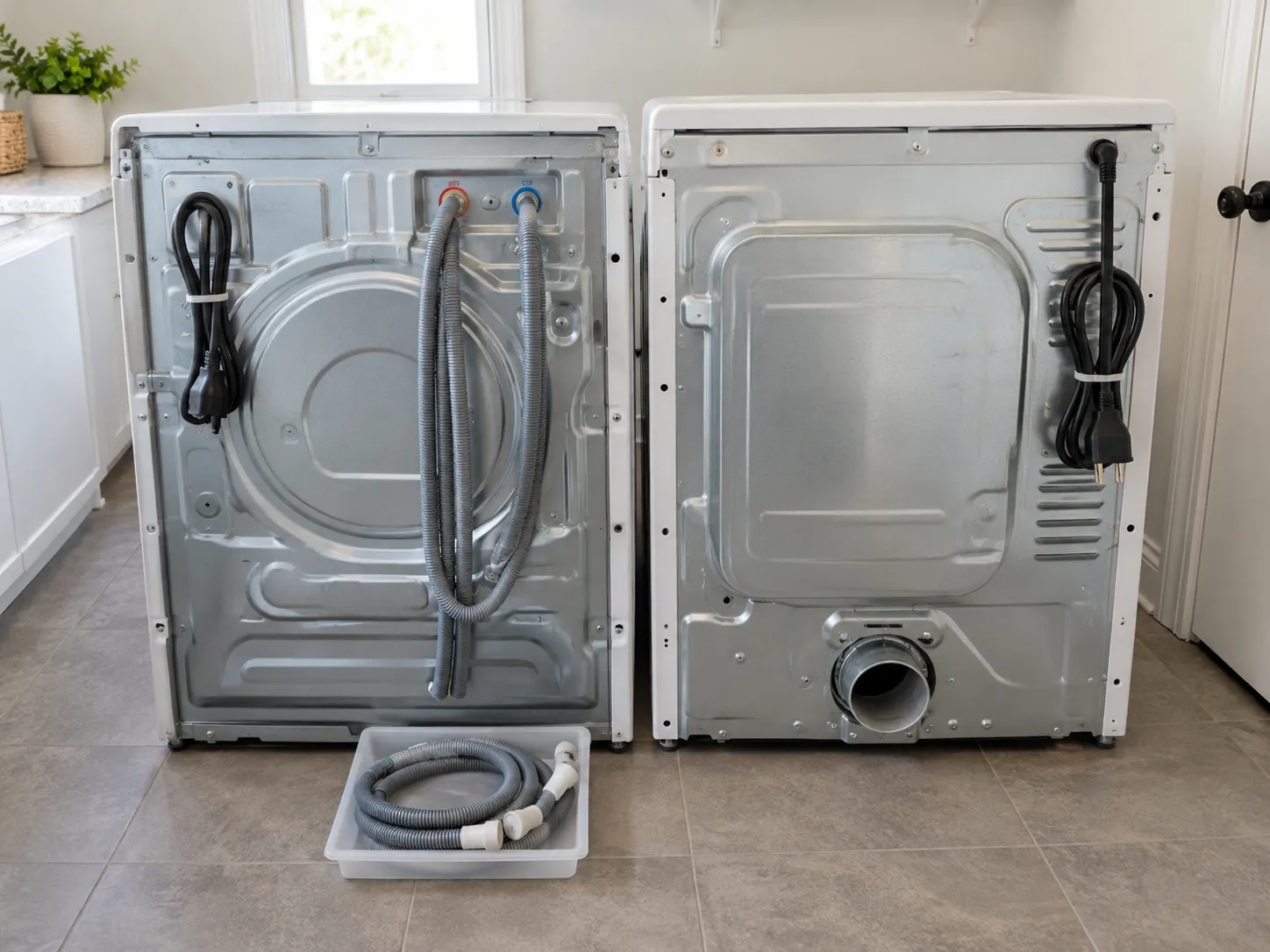
Before a washer or dryer can move, empty the drums, disconnect the utilities, contain residual water, and clear the route. A gas dryer needs qualified disconnection. Tell the pickup team if the units are stacked, inside a closet, or down a narrow stair.
Separate removal work from trade work
Hauling starts after the appliance is safely disconnected. Shutoff valves, hardwired connections, and gas fittings can require a plumber, electrician, or appliance installer. Do not loosen a gas fitting as part of pickup preparation. Confirm the disconnection before the hauling window.
Drain and secure the washer
Run the manufacturer’s drain or spin cycle if the machine still operates. Turn off the water, disconnect the hoses, and place the hose ends in a tray. Wipe the detergent drawer and drum. Secure the power cord and hoses so they do not drag under the dolly.
Check the layout
| Setup | Detail to report |
|---|---|
| Stacked pair | Whether the units are already unstacked and accessible |
| Laundry closet | Door width and clearance beside the units |
| Basement | Stair width, turns, handrails, and exterior exit |
| Apartment | Elevator reservation, loading area, and parking rules |
Protect the route
Move baskets, shelving, and rugs out of the path. Keep pets and children away from the work area. A clear floor gives the crew room for a dolly and reduces contact with corners and door trim.
Review the full washer and dryer removal scope, then call or email with access details.
Sources and scope
Local disposal distinctions were checked against current Snohomish County, King County, or city guidance listed in the project research notes. Facility acceptance, fees, and programs can change; verify the responsible source before drop-off.